Growing Boysenberry - How To Care For And Harvest Boysenberries
The boysenberry is the product of dear, relentless work, and true friendship. That's how this unique cultivar came into existence. One berry farmer in California (Rudolph Boysen) started this act of love to create a purplish-ruddy berry that was dissimilar from all the berries out there. When Boysen quit and sold his subcontract, his friend Walter Knotts picked up the withering vines, nourished them back to life, and named the succulent berries after Boysen.
This Disney story (all true) is the reason we take boysenberry today. And if you have wondered virtually how to grow boysenberry before, read 1 to notice out all about this abaft bramble and how to harvest the purplish berries.
Boysenberry At a Glance
A member of the Rubus genus, boysenberry (Rubus ursinus × Rubus idaeus) is a cultivar that was offset obtained by crossbreeding raspberry, blackberry, dewberry, and loganberry. In the early twentieth century, when the berry first appeared, it failed to stir the appetite of Californians already spoilt for options when it comes to berries.
Simply a persistent berry lover (Knotts) started offering boysenberry in his berry stand, and somewhen it caught on.
More of a bramble than an bodily vine, the cultivar has woody stems and sharp thorns and grows well in zones v to ix. The plant grows horizontally compared to other brambles that grow erect. Simply information technology's the berries that take hold of your middle and brand your mouth water.
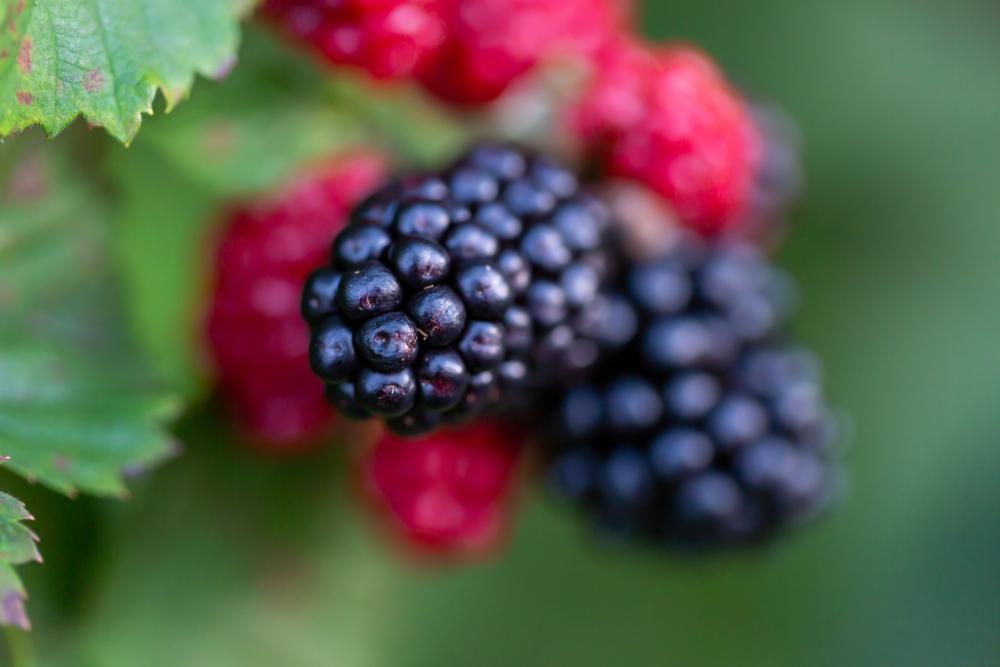
Boysenberry is a blackberry with hints of royal and cherry-red. The berry is round and frequently larger than an boilerplate blackberry and packed with flavors. Yous tin can use boysenberry as a good alternative for blackberry or any other drupe. You lot tin can eat information technology fresh, put it in fruit salads, smoothies, fruit juices, and bake it to make delicious pies.
Boysenberry Benefits
Berries are famous for packing healthy nutrients that benefit the body and boost the immune system. Boysenberry, beingness a product of 4 different berries, has more nutrients and health benefits than the average berry.
- Antioxidants: Boysenberry is rich in antioxidants that heave the immune system and filter the gratis radicals swimming in the bloodstream that cause clots and damage the blood vessel walls.
- Vitamin C: While boysenberry has a lot of vitamins, information technology's particularly known for its high contents of vitamin C. This essential vitamin boosts heart health and improves the allowed organisation'south ability to fight the common cold and other related infections.
- Vitamin K: This is i of the vital vitamins for the health of brain cells. Vitamin K improves brain cell regeneration, and eating a scattering of boysenberries every day improves brain functionality.
- Fiber: Since 70 percent of the immune organization resides in our guts, it makes sense to keep our guts healthy. One way to do that is to feed the skillful gut bacteria with cobweb. Boysenberry is packed with fibers that improve gut wellness and prevent many digestive problems.
- Low Calories: For all of these benefits, you won't get many calories out of your daily diet of boysenberries. The drupe has low-fat content, and so all in all, it's a healthy superfood to binge on.
Boysenberry Varieties
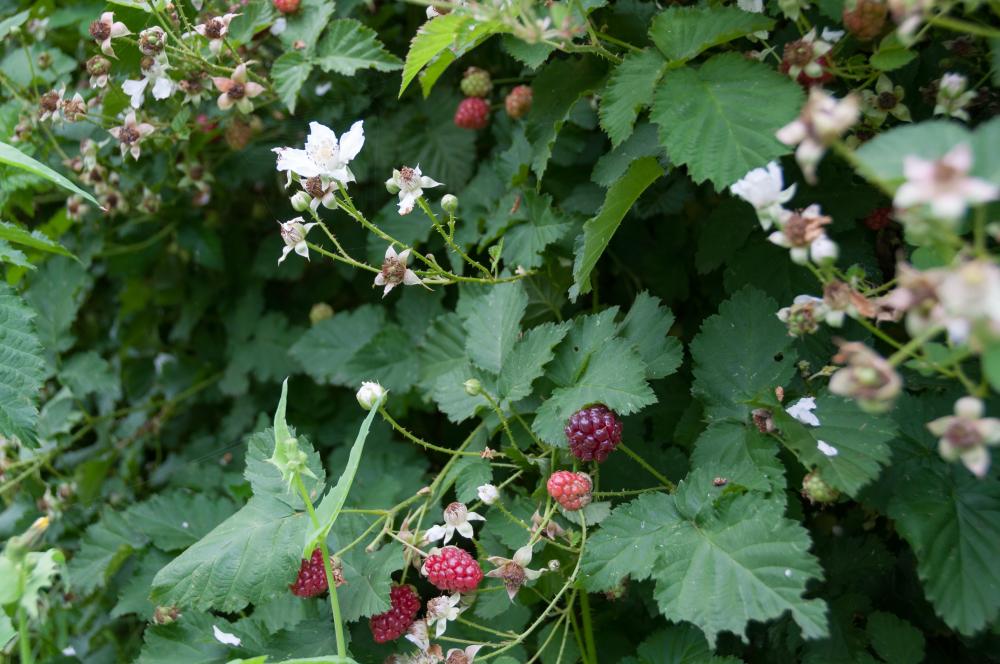
White itself a cultivar, boysenberry soon branched out. Once it became popular and crossed the state lines and afterwards that went international, more cultivars grew out of the backyards of hobbyists as well equally serious farmers. Here are some cultivars to consider.
- Boysenberry: This is the official name for the cultivar in the US. It tin exist either thorny or thornless. In most cases, you won't know what you'll go until the brier is growing in your garden.
- Brulee: This cultivar comes from New Zealand. The plants are thornless, and the berries are sweeter than the original cultivar developed in the US. Still, it's non easy to go your easily on this cultivar, and you'll have to contact a farm in New Zealand to transport y'all a few plants.
- Tasman: Another New Zealand cultivar, only the thornless part is all the same a toss-upward. It has a higher yield than other cultivars, only the drupe is less sweet than the Brulee diversity.
- Mapua: This New Zealand cultivar has strong flavors, and the berries take more cherry than purple shades.
How to Grow Boysenberry
Even though the boysenberry bushes tend to spread horizontally, you lot tin train them to grow upwards. This saves you lot a lot of space and besides makes caring for and maintaining the berries a lot easier. And then before anything, you should ready the garden and prepare upwardly the trellis for support.
- Select an expanse that gets between six to 8 hours of sun every twenty-four hours. Partial shade in the afternoon might exist expert if you lot live in a hot zone where the summertime dominicus could impairment the ripening berries.
- Turn up the pinnacle 12 inches of the soil and mix in organic materials and anile manure to enrich the soil. Test the soil for drainage and amend it with sand or perlite every bit needed.
- Ready the trellis to provide back up for the climbing brier. You can also plant boysenberry next to a contend every bit long every bit it gets plenty of sun during the growing season.
- Once the soil has thawed by the end of the winter, you can plant the boysenberry cane in the soil. The bramble goes dormant in the wintertime, so the best fourth dimension to plant it is before it comes out of dormancy.
- Dig a hole almost 12 inches deep and the same in width to accommodate the root brawl of the young boysenberry bush.
- Line the bottom of the hole with more anile manure. Mix the manure with the soil you dug out of the hole.
- Ease the sapling out of the pot or packaging it came in and examine the roots for any damage.
- Spread the roots to fill upwards the bottom of the pigsty and stand the plant upright before backfilling the hole with the soil and manure mixture. Pack information technology firmly to button out air pockets.
- H2o the sapling immediately and keep the soil moist until you see new growth on the immature bush.
- If y'all're planting more than than 1 boysenberry bramble, space the plants v feet apart and use one long trellis for every ii bushes.
Boysenberry Intendance
Boysenberry care starts almost from the day you constitute the saplings in your garden, and they send out branches every other fashion. Training those tender branches to climb the trellis or debate early is the best guarantee that they volition not crawl all over the ground and harm the berries. Winterizing the bramble is as well of import for its survival.
Watering
Boysenberry brambles are thirsty plants that demand enough of water during the growing season. On average, you'll need to provide between ane to ii inches of water per week. Y'all should factor in any rainfall and count it as office of this h2o quota. When you h2o the brier during the hot days of the summer, y'all better practice so in the early forenoon. Aim the water at the root of the bush and avoid getting the leaves or lower branches wet to avoid fungal infections. One adept cue for yous to water the bush is when the top 1 inch of the soil goes dry out. After y'all harvest the berries and the leaves fall, cutting down on the h2o.
Fertilizer
The boysenberry's appetite for feeding is most every bit bang-up equally its need for water. Earlier planting the sapling, add together 2 inches of organic materials to every one human foot of soil. That will give the plant a skillful first. From the fourth dimension you discover early on growth in the spring, start applying a balanced 10-10-10 fertilizer in one case every two weeks. Earlier the blossom buds in the mid-spring, apply a phosphorus-high custom fertilizer to encourage an abundance of blooms. Switch back to the balanced fertilizer from the beginning of summer until two weeks before the berries are ripe. Side-wearing apparel with organic compost to provide whatsoever other minerals the soil might be scarce in.
Winterizing
How harsh your winter will make up one's mind the type of boysenberry winterizing you'll have to perform. For mild winters devoid of excessive frosts or frigid temperatures, you lot'll merely demand to cut back the bramble leaving the main branches, so encompass the ground with iii inches of mulch. Use harbinger or shredded bark to embrace the ground and protect the roots from freezing over. Use the mulch in the autumn and keep it until the leap.
In severe winters packed with snow and other hazards, prune the bramble in the fall down to the chief branches. Bring the branches downward to the ground and lay them together. Cover the branches with 2 inches of soil, so they're completely surreptitious. Comprehend the soil with a thick layer of mulch and keep them there all winter. In the leap, lift them upwards and hoist them back on the trellis.
Pruning
When it comes to pruning boysenberry, y'all need to tell the difference between which branches to cut and which to leave on the brier. Floricanes are old woody branches with dark or gray skin and should be removed. Primocanes are young branches, sparse and green. Yous need to keep primocanes considering they bear flowers and berries. Afterwards removing all floricanes, sparse out the primocanes leaving only well-nigh vii per bush. The all-time fourth dimension to prune the bramble is in the fall after the leaves accept fallen and before the first frost.
Pests and Diseases
Similar many berries, boysenberry is plagued with a lot of pests. The virtually mutual ones are cutworms, thrips, aphids, cane borers, leafhoppers, whiteflies, and red drupe mites. You lot can choice the large insects by manus and drown them in a saucepan full of soapy h2o. As for the tiny pests, spray them with neem oil to eliminate them. Neem oil is a natural pesticide that is extracted from plants and has no negative impact either on the environs or the safety of the berries.
Equally for diseases, boysenberries are prone to cane and leaf rust, Anthracnose, crown gall, Derryberry illness, and orange rust, among others.
Harvesting Boysenberry
Harvesting boysenberry is a rather lengthy process. The berries take all summer to ripen, and you can kickoff harvesting them in July. But not all berries become ripe at the aforementioned time, and you'll be harvesting a patch at a fourth dimension well into August. The ripe berries are rather fragile, and you'll need to use your hands and be gentle non to squash them while picking them. Besides, picket out for the thorns and wear protective eyeglasses and thick gloves.
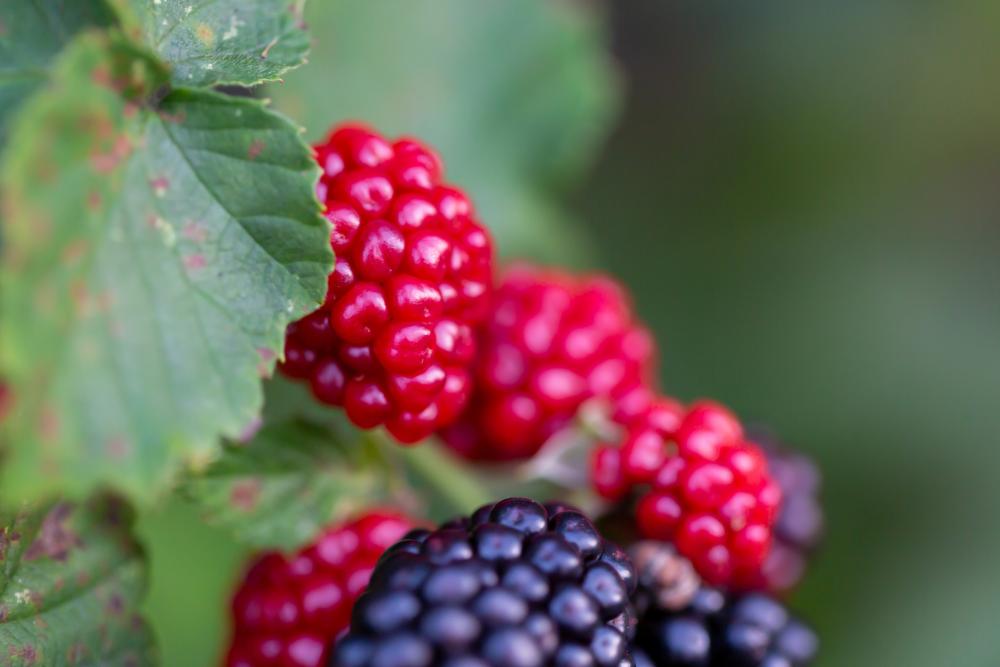
On their ripening journey, the boysenberries get through all the colors of their parents. The berries volition turn from green to pink to red, so deep red, imperial, and finally black. You'll need to harvest them when they're dark regal because that'due south when they're the sweetest.
Shop the berries in the refrigerator for up to a week. They taste meliorate when eaten fresh. If yous can't consume them all, brand drupe jam to preserve them.
Source: https://www.diys.com/growing-boysenberry/
0 Response to "Growing Boysenberry - How To Care For And Harvest Boysenberries"
Post a Comment